The Mining Town Bolivia's US-Backed Army Slaughtered in Its Sleep
d
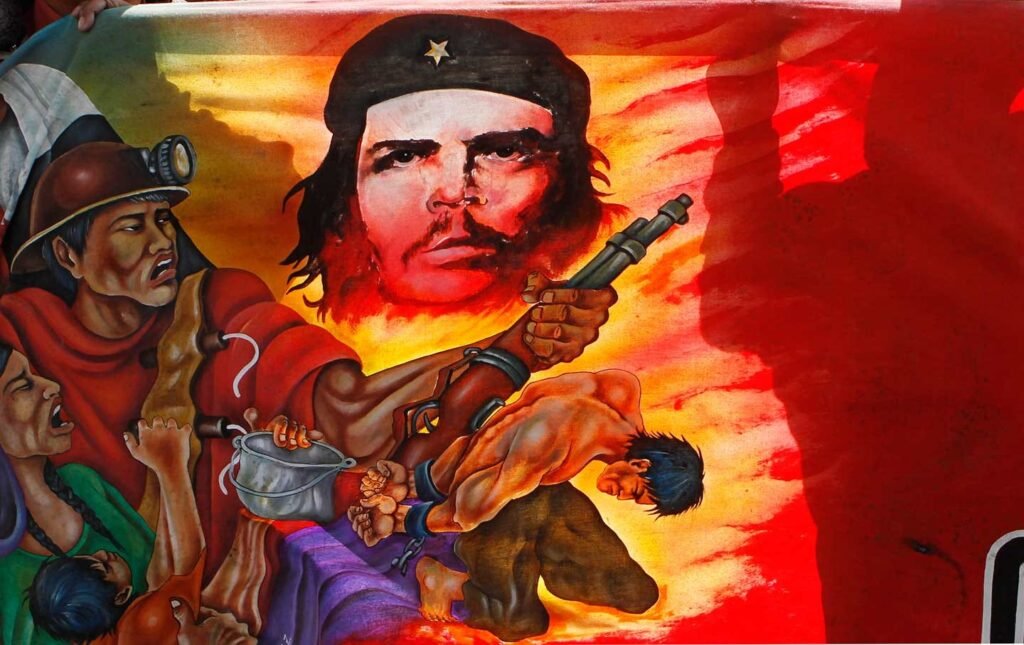
id you know an entire mining town was massacred because it pledged a few days’ wages to Che Guevara? It happened in Bolivia, in 1967, and the men who ordered it were trained and paid for by Washington. Almost nobody outside the Andes has heard of it. That is not an accident.
Every 24 June, the cold comes down hard on the Bolivian altiplano. It is the winter solstice in the southern hemisphere, the longest night of the year, and in the tin camps strung along the hills above Llallagua the tradition never changed: bonfires outside every door, singani passed hand to hand, cuecas and huayños until the early hours, sticks of dynamite set off for the sheer joy of the noise. In 1967, that noise became the cover for a slaughter. By the time the sun came up over Siglo XX, the army had turned the festival of Saint John into one of the worst crimes of Bolivia’s US-backed dictatorship.
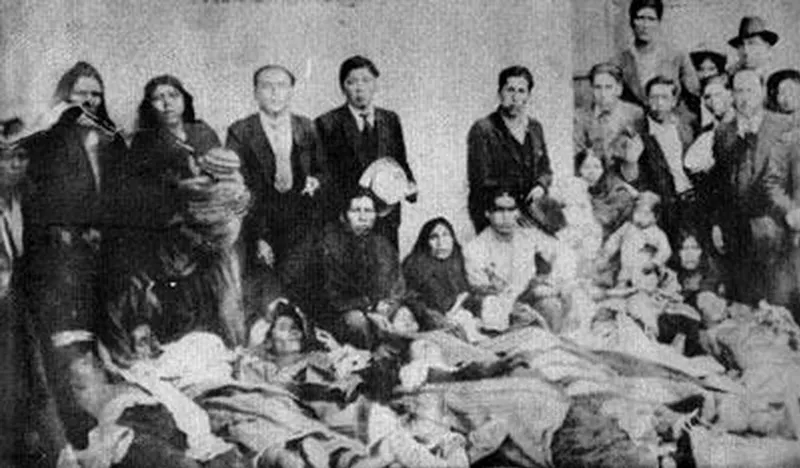
This is a history the people who carried it out spent decades trying to bury, and it deserves to be told plainly. On the night of 23 to 24 June 1967, soldiers of the Ranger and Camacho regiments came down by rail from Oruro and surrounded the Siglo XX-Catavi mining complex while the families slept off the celebration. Around five in the morning they opened fire from every angle with machine guns and dynamite, then went house to house. The first press accounts spoke of roughly twenty killed and seventy-two wounded. Later counts, once you add the disappeared, run much higher. The survivor and writer Víctor Montoya, among others, has put the toll well past fifty, with some estimates of dead, wounded and vanished reaching two hundred. The exact figure was never established, and that was the point. The junta cut the electricity before the attack so the camp’s own station, La Voz del Minero, could not raise the alarm or tell the world.
The reason for the killing is the part the textbooks still flinch from. Che Guevara’s guerrilla was in the field that year, dug in around the Ñancahuazú river in the southeast, the far side of the country from Llallagua. The miners of Siglo XX were among the few in Bolivia who openly threw their lot in with him. Days before the massacre, the FSTMB was preparing an ampliado, an enlarged union assembly, at Siglo XX, and the workers had voted to back the insurgency with two mitas, two days’ wages each, plus food and medicine. For a workforce of some twenty thousand COMIBOL miners on starvation pay, that was a serious act of solidarity, and President René Barrientos understood it as one. He had convinced himself that every miner hid “a cunning terrorist,” in Eduardo Galeano’s phrase, and he chose to drown the threat in its cradle. The regime later claimed Che’s army itself was massing in the camps. It was a lie, and everyone knew it.
To call the dictatorship “US-backed” is not rhetoric. It is the documented record. Barrientos had seized power in a 1964 coup and governed as Washington’s man in the Andes. The same Rangers who would hunt down and execute Guevara that October were trained at La Esperanza by sixteen US Green Berets who arrived in May 1967, while the CIA’s Félix Rodríguez worked the field alongside them. The counterinsurgency machine that ended in a schoolhouse at La Higuera passed first through the mining camps of the north. The massacre in June and the murder of Che in October belong to the same campaign.
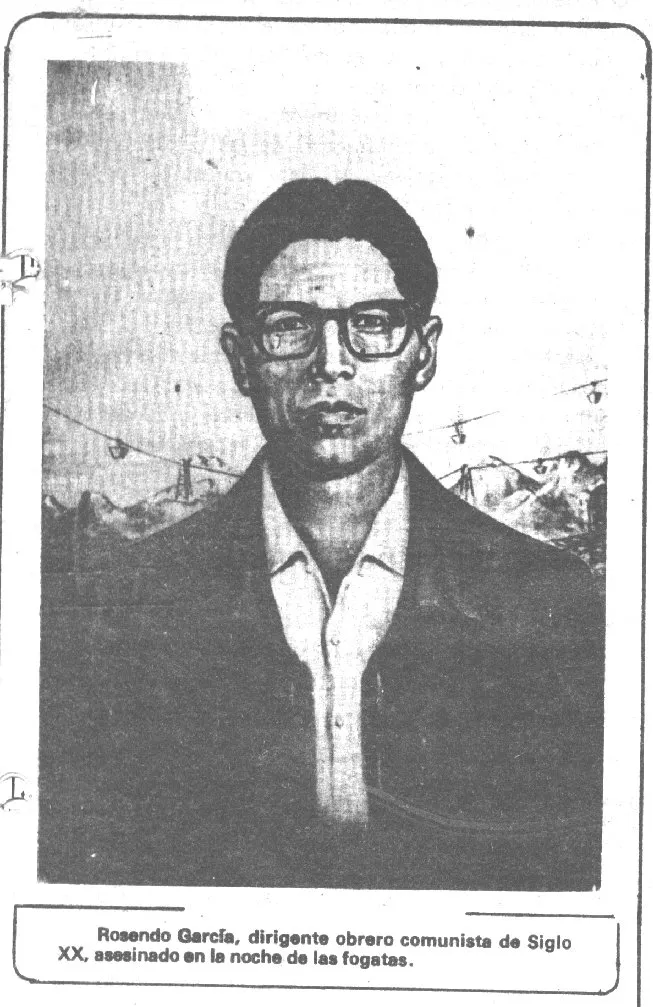
Among the dead was Rosendo García Maisman, thirty-two years old, a Communist Party cadre and one of the most feared working-class leaders in the country. He was shot behind a window with an old rifle in his hands, trying to keep the soldiers out of the radio station. The military seized the union hall and silenced the airwaves.
Many leaders who survived the night were hauled off in the crackdown that followed. One was Domitila Barrios de Chungara. She was pregnant.
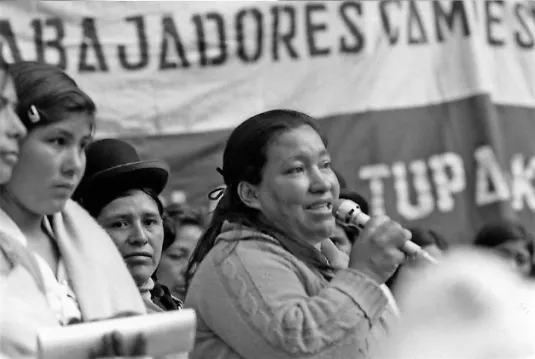
The soldiers accused her of being a “guerrilla link” and beat her in her cell until she lost the child. Her testimony, recorded by the sociologist Moema Viezzer in Si me permiten hablar (1977), is one of the great firsthand indictments of the regime. The anthropologist June Nash lived among these miners. She set San Juan within a long pattern of company and state violence in her study We Eat the Mines and the Mines Eat Us (1979). The historian James Dunkerley traced the political machinery of the Barrientos years in Rebellion in the Veins (1984). And the filmmaker Jorge Sanjinés turned the night into the 1971 reconstruction El coraje del pueblo, made with the survivors themselves playing their own dead.
What the dictatorship could not finally do was erase the memory. Today the walls of Llallagua carry murals to the fallen, one of which reads: “For those who, with sweat and blood, opened the path for change.” The men and women killed on the night of San Juan were not collateral damage in a distant Cold War. They were workers who had decided, freely and at real cost, which side they were on, and they were punished for it by their own government acting on a foreign empire’s orders. Almost sixty years on, the Bolivian state marks the date with official homage and the human-rights office speaks of memoria, verdad y justicia. The words are right. But memory is not neutral, and neither was that night. The least we owe the dead of Siglo XX is to name what happened to them, and who held the rifles, and who paid for the training.
Sources
San Juan massacre, Wikipedia (English), drawing on the FSTMB, La Patria (Oruro), The New York Times (P. Montgomery, 17 June 1967) and British Pathé newsreel footage. https://en.wikipedia.org/wiki/San_Juan_massacre
Masacre de San Juan, Wikipedia (Spanish), with the Galeano and Montoya passages and the list of named victims. https://es.wikipedia.org/wiki/Masacre_de_San_Juan
Víctor Montoya, “La masacre minera de San Juan,” eyewitness chronicle. https://www.margencero.es/articulos/new03/masacre_minera.html
Eduardo Galeano, Memoria del fuego III: El siglo del viento (1986) — the “huracán de balas” passage.
Domitila Barrios de Chungara with Moema Viezzer, Si me permiten hablar… Testimonio de Domitila, una mujer de las minas de Bolivia (Siglo XXI, 1977).
June Nash, We Eat the Mines and the Mines Eat Us: Dependency and Exploitation in Bolivian Tin Mines (Columbia University Press, 1979).
James Dunkerley, Rebellion in the Veins: Political Struggle in Bolivia, 1952–82 (Verso, 1984). https://archive.org/details/rebellioninveins0000dunk
US Army Special Operations history, “Turning the Tables on Che: The Training at La Esperanza,” on the Green Beret training of the Bolivian Rangers. https://arsof-history.org/articles/v4n4_turning_tables_che_page_1.html
Defensoría del Pueblo de Bolivia, “A 58 años de la Masacre de San Juan: memoria, verdad y derechos humanos.” https://www.defensoria.gob.bo/noticias/a-58-anyos-de-la-masacre-de-san-juanmemoria,-verdad-y-derechos-humanos
Jorge Sanjinés (dir.), El coraje del pueblo (1971).
More Stories
IMF report details a financial system with rising risks and vulnerabilities
Bowing to Washington’s pressure, Sri Lanka and India refuse to provide aid to Iranian ships
Marco Rubio declares West must dominate world, praises colonialism, erases history