Today is the birthday of Patrice Lumumba, the Congo’s first democratically elected leader, killed within seven months of taking office with the help of Belgium and the United States. Why did they kill him? Not for communism, whatever they said at the time. For believing the Congo’s wealth should belong to the Congolese. That was enough. Sixty-five years later the fight he died for is still lost, and the clearest winner today is China.
The Democratic Republic of the Congo holds an estimated $24 trillion in untapped minerals, the richest ground on earth, including close to half the world’s cobalt reserves. Yet it ranks 179th of 193 countries on the UN Human Development Index, below Afghanistan, with more than 80 percent of its people in poverty. The wealth is Congolese. The ownership is not. Half a century ago the historian Walter Rodney explained why: Africa’s poverty is produced, not inherited, through exploitation in trade and exploitation in investment. The Congo is that thesis written in cobalt. And China now runs the machine.
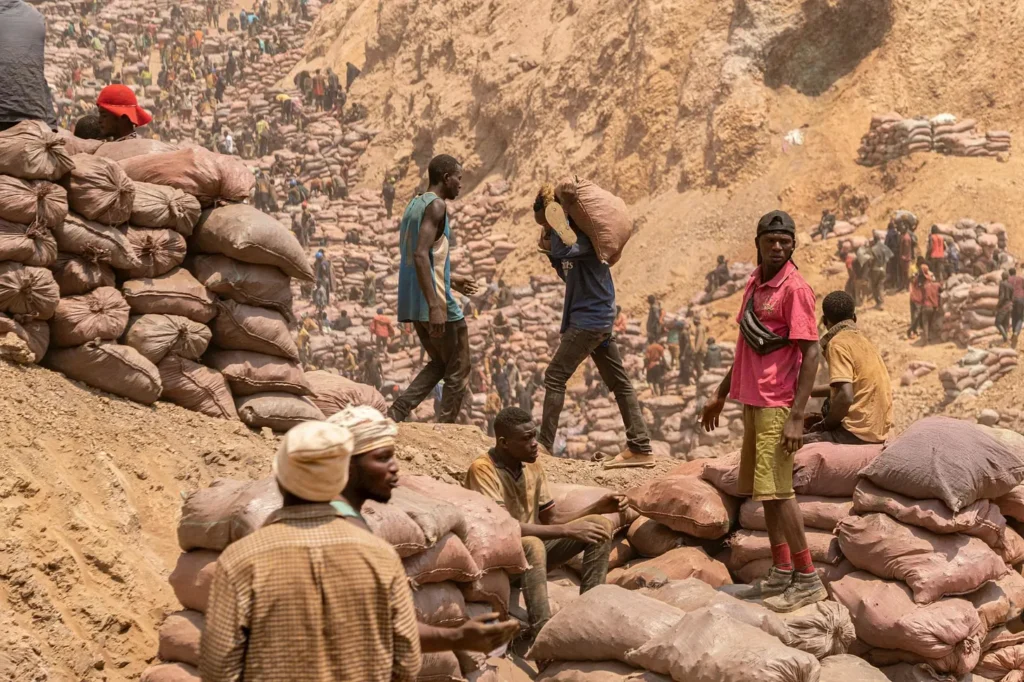
The model is simple. Own the mine, control the refining. Chinese firms hold stakes in 15 of the Congo’s 19 industrial cobalt mines. One company, CMOC, owns 80 percent of the giant Tenke Fungurume mine; in 2024 it lifted its cobalt output to 114,000 tonnes and pushed its share of the global cobalt market from 24 to 31 percent in a single year. The Congo now supplies the great majority of China’s cobalt, and Chinese plants refine about 78 percent of the world’s supply. So the country that owns the metal does almost none of the work that makes it worth anything. It just digs.
Put hard numbers on it. In 2024 the Congo exported about $29.6 billion in goods, roughly 90 percent of it minerals. The state kept around $5 billion. On top of that, a 2025 state audit found a $16.8 billion gap between what mining firms reported to the tax authorities and what they declared to the community funds they are legally bound to pay, over 2018 to 2023. So of every $30 billion that leaves the ground each year, the Congo holds on to maybe five. Seventeen cents on the dollar. The other 83 leave the country. And $24 trillion still sits underground, in a place where most people live on less than $2 a day.
Follow a single tonne of that cobalt up the chain and the drain becomes visible. At the mine gate, CMOC booked a record net profit of 13.5 billion yuan, about $1.9 billion, in 2024, most of it from its two Congolese mines. One foreign miner’s profit, nearly 40 percent of what the entire Congolese state collected from mining that year. One rung up, at the refinery, China turns the ore into battery-grade chemicals at margins of 35 to 45 percent. One rung higher, its lithium-battery industry, built on those refined inputs, turned over about $97 billion and made around 70 percent of the world’s cells; its champion, CATL, cleared roughly $7 billion in profit, more than the Congolese government took from all of its mines combined. At the top sit the electric cars and the phones those cells power, a market worth more than a trillion dollars, almost none of it captured in Africa. Of every dollar the Congo’s rock will finally earn, the country keeps a handful of cents. The rest compounds abroad. And this, remember, is what the world has learned to call a green transition.
China’s defenders point, fairly, to what the money has built. And it has built things. The question is who they are for. Under the Sicomines “minerals-for-infrastructure” deal, Chinese firms laid some 480 kilometers of roads, the boulevards of Kinshasa, the Cinquantenaire Hospital. But look at the map. The showpieces sit in the capital, where they buy the government goodwill, while the working roads run through the cobalt belt, the arteries that carry the metal out. It is exactly the exploitation through investment Rodney described. Capital that builds only what deepens the drain.
And the Congolese pay for these gifts with their own minerals. A 2023 state audit found the Chinese partners had earned close to $10 billion in profit while the country received $822 million in infrastructure, a fraction of the $3 billion promised, with Kinshasa left a minority shareholder on 32 percent. The deal was tax-exempt until the loans are repaid, so the treasury sees little for years; one model found its net present value to the Congo had fallen from $10 billion to minus $150 million. After years of protest it was renegotiated up to $7 billion in 2024, but only while copper holds above $8,000 a tonne. CMOC, which bought Tenke from America’s Freeport in 2016, later paid the state a roughly $2 billion settlement for underdeclaring what the mine held. An admission, in other words, that the country had been robbed in plain sight.
Then there is the debt, the oldest instrument of the drain. The IMF’s 2024 review puts the Congo at moderate risk of debt distress, and made its own lending conditional on the country first restructuring its debts to China, after which Beijing stretched repayment out fifteen more years. Sicomines itself is a debt secured against a mountain of copper. The Congo borrows against the very wealth being carried out of it, then has to keep the mines running flat out just to service what it owes.
Those who lend us money are those who colonised us before (…) A cleverly managed reconquest of Africa” Thomas Sankara
None of this makes China unique. The United States took the Congo’s uranium for the atom bomb and now owns the railway that moves the ore. The Gulf launders its gold. Rubber for Leopold, uranium for Washington, cobalt for Beijing. Different flags, different decades, the same drain. We on the left have learned what those words cover when the powerful start talking about “partnerships” and a “green transition.” The pattern holds under all of them: Congolese rock and Congolese labor make wealth that is captured and compounded abroad, while the people above it stay among the poorest alive. That is what Lumumba died trying to stop.
The Congo is not poor. It is robbed. Its people do not lack wealth; they are denied it. Until the wealth that leaves through the pits comes back as schools, hospitals, and the refineries the country is never allowed to build, the independence of 1960 stays unfinished. Lumumba already told us how it ends. Africa will write its own history.
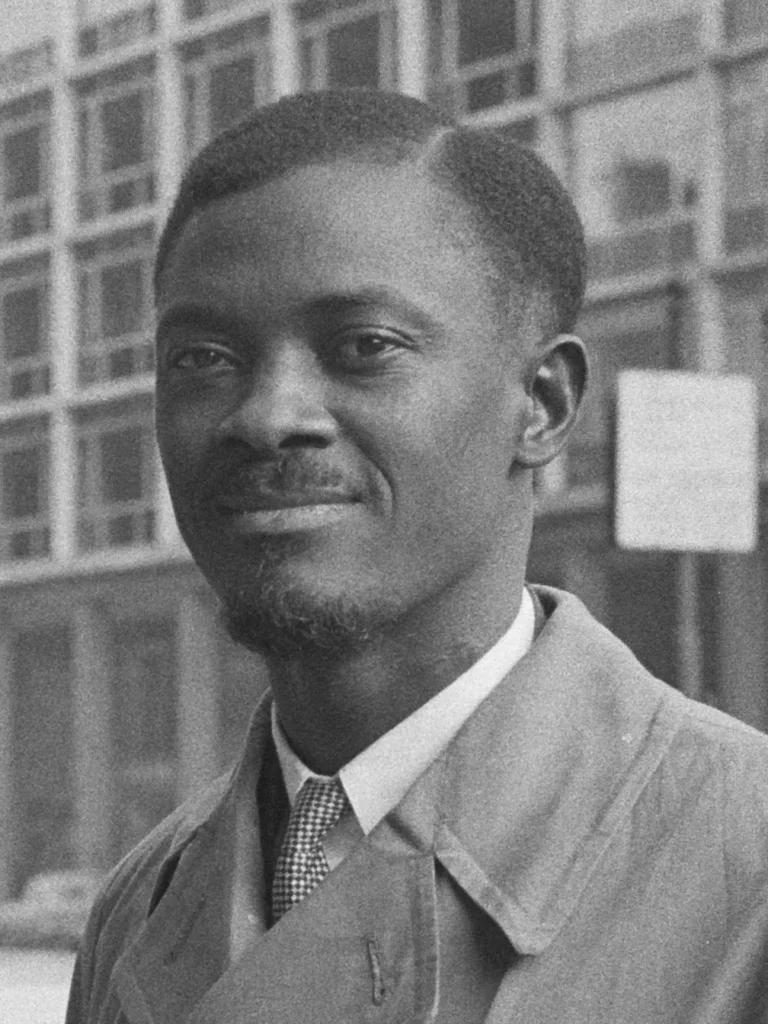
Patrice Lumumba’s Last Letter to Pauline Lumumba from Thysville Prison
My dear wife,
I am writing these words to you, not knowing whether they will ever reach you, or whether I shall be alive when you read them.
Throughout my struggle for the independence of our country I have never doubted the victory of our sacred cause, to which I and my comrades have dedicated all our lives.
But the only thing which we wanted for our country is the right to a worthy life, to dignity without pretence, to independence without restrictions.
This was never the desire of the Belgian colonialists and their Western allies, who received, direct or indirect, open or concealed, support from some highly placed officials of the United Nations, the body upon which we placed all our hope when we appealed to it for help.
They seduced some of our compatriots, bought others and did everything to distort the truth and smear our independence.
What I can say is this—alive or dead, free or in jail—it is not a question of me personally.
The main thing is the Congo, our unhappy people, whose independence is being trampled upon.
That is why they have shut us away in prison and why they keep us far away from the people. But my faith remains indestructible.
I know and feel deep in my heart that sooner or later my people will rid themselves of their internal and external enemies, that they will rise up as one in order to say ‘No’ to colonialism, to brazen, dying colonialism, in order to win their dignity in a clean land.
We are not alone. Africa, Asia, the free peoples and the peoples fighting for their freedom in all corners of the world will always be side by side with the millions of Congolese who will not give up the struggle while there is even one colonialist or colonialist mercenary in our country.
To my sons, whom I am leaving and whom, perhaps, I shall not see again, I want to say that the future of the Congo is splendid and that I expect from them, as from every Congolese, the fulfilment of the sacred task of restoring our independence and our sovereignty.
Without dignity there is no freedom, without justice there is no dignity and without independence there are no free men.
Cruelty, insults and torture can never force me to ask for mercy, because I prefer to die with head high, with indestructible faith and profound belief in the destiny of our country than to live in humility and renounce the principles which are sacred to me.
The day will come when history will speak. But it will not be the history which will be taught in Brussels, Paris, Washington or the United Nations.
It will be the history which will be taught in the countries which have won freedom from colonialism and its puppets.
Africa will write its own history and in both north and south it will be a history of glory and dignity.
Do not weep for me. I know that my tormented country will be able to defend its freedom and its independence.
Long live the Congo!
Long live Africa!
Thysville prison
Patrice LUMUMBA
More Stories
The record of the New York Times on the “war on terror”
Trump ends fascist convention by calling on attendees to pledge allegiance to him
Sheinbaum vows Mexico “will never be a colony” while offering military collaboration, cheap labor and minerals to Trump